

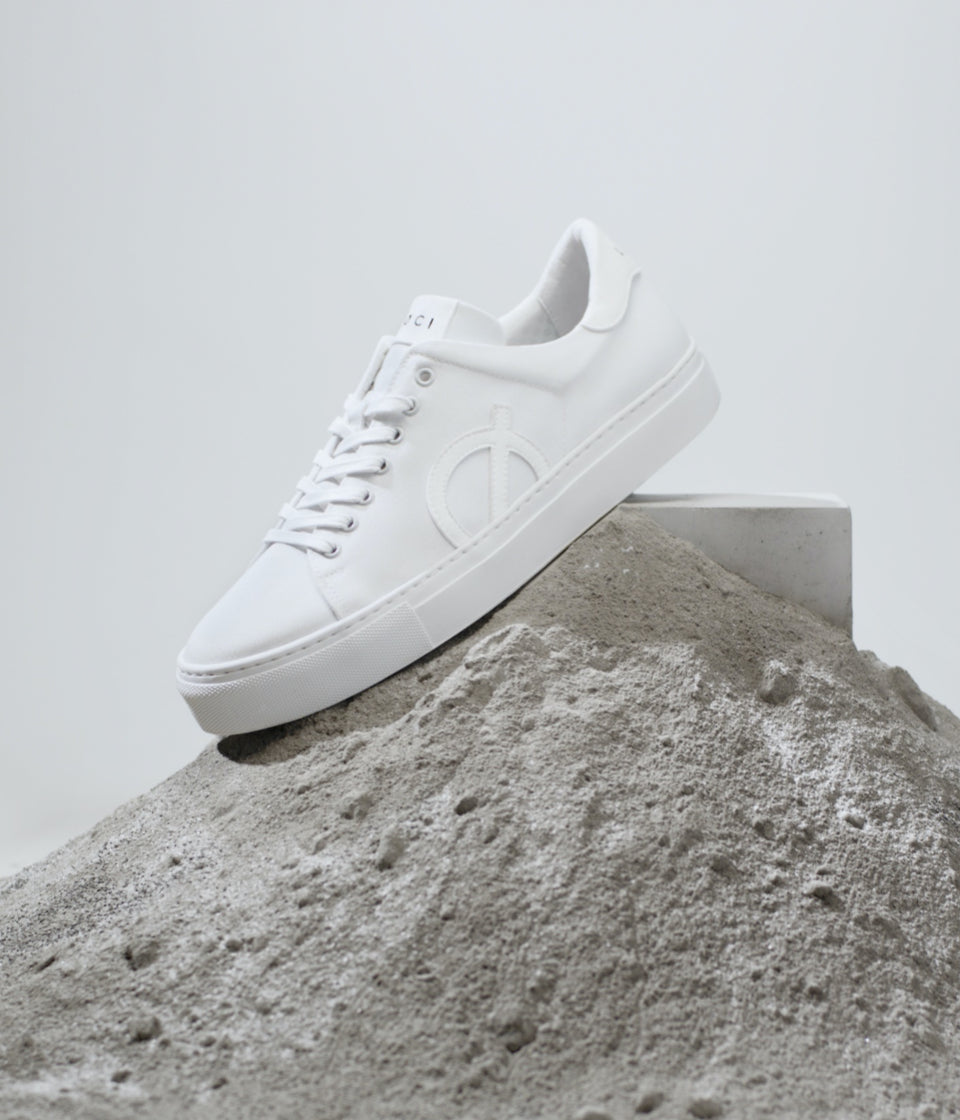
How to spot genuine sustainability claims in vegan leather sneakers
A vegan label answers one important question: whether animal-derived materials are used. It does not, by itself, explain a sneaker’s carbon footprint, chemical inputs, working conditions, durability or end-of-life options. When a product page uses phrases such as “bio leather”, “conscious” or “eco-friendly”, assess whether the claim is specific, proportionate and possible to check.
A credible sustainability story connects the material to the whole product and its expected lifespan. Use the framework below to inspect what a brand says, what it leaves out and what evidence would help you compare two vegan leather sneakers fairly.

1. Start with the exact material claim
Look for the named material, the percentage it represents and the part of the sneaker it covers. “Bio”, “plant-based” and “recycled” can describe an input, but they do not tell you whether it makes up the entire upper, a coating, a backing layer or a small component. “Bio leather” is not a complete environmental assessment unless the product page explains what the term means and how much of the relevant material is bio-based.
A stronger claim identifies the source of the input, such as a named plant or recycled feedstock, and distinguishes bio-based content from recycled content. It may also explain testing, a chain-of-custody system or an independent certification. If a percentage is given, check whether it refers to the material, the upper or the complete shoe. Those are different boundaries, and the difference matters.
For example, LØCI’s FUSION product page uses the wording “vegan Bio leather” and refers to exterior panelling and a rubber sole. Treat that as a useful starting point for investigation: inspect the page for the composition of the panelling and the other components rather than assuming the phrase describes the entire trainer. LØCI’s ØRIGIN product page is another example of product-page wording described as a “vegan sneaker”. These examples illustrate the checking process; vegan is a relevant attribute, but it is not interchangeable with recycled, bio-based or sustainable.


2. Check the whole product, not just the upper
A sneaker is a mixed-material object. Ask whether the product page accounts for the upper, lining, tongue, insole, midsole, outsole, laces, trims, thread and adhesives. A brand may make a precise claim about one panel while using different materials elsewhere. That does not automatically make the product a poor choice; it simply means the claim should stay within its stated scope.
A transparent page makes those boundaries easier to understand. It may list components separately, state where recycled or bio-based content appears and explain unavoidable blends. Be cautious when a headline suggests that the whole sneaker is made from one special material but the specification only names the upper. If key components are missing, ask customer service: “What are the materials and percentages for each major component, including the lining, insole, sole unit and adhesives?”
The aim is informed scrutiny, not a binary pass or fail: compare the scope of each claim with the part of the product it actually describes, then note which questions remain unanswered.


3. Look for sourcing, production and proof
“Ethically made” is meaningful only when it has context. Look for the country or countries involved, the factory or supplier relationship, the standards used and whether social audits or worker protections are described. A manufacturing location can add useful information, but geography alone does not prove good labour conditions or a low-impact process.
Durability is part of the evidence too. Look for construction details, reinforcement, stitching, bonding, care guidance, spare parts, repair options and a realistic explanation of expected wear. “Made to last” is a positive direction, but it is stronger when supported by materials, testing, warranty terms or practical care instructions. A longer useful life can reduce the need to replace a pair, although durability should not be assumed from premium wording alone.
End-of-life information should be equally precise. Can the shoe be repaired, separated, returned, resoled or recycled? Are mixed materials likely to limit those options? If a brand says a product is recyclable or biodegradable, ask under which facilities and conditions, and whether the claim applies to the whole shoe or only one material. Do not confuse a charitable or conservation partnership with an end-of-life solution: those may be worthwhile commitments, but they answer different questions.
The same approach applies to certifications. Check the full name of the scheme, what it certifies, which component or stage it covers, who verifies it and whether the certificate or scope can be found. A logo without an explanation is weaker evidence than a named standard with a clear boundary. The best claims are proportionate: “the outsole contains X% recycled content, verified under Y standard” is easier to assess than “planet-positive trainers”. If details are unavailable, record the claim as unverified rather than treating missing information as proof either way.
Before buying, save the product page and run the same questions across every pair you are considering: What exactly is vegan, bio-based or recycled, and in what percentage? Which parts of the sneaker are covered? Where was it made, under what standards and with what supplier information? What supports the durability claim, and how should the shoe be cared for? Can it be repaired, returned or responsibly processed at end of life? Which claims are independently verified, and which are simply brand language?
Red flags include broad promises with no definitions, percentages without a stated boundary, certification logos without scope, “ethical” wording with no production context and claims that seem to describe one panel as though they describe the whole shoe. Stronger evidence is specific, limited to what the brand can support and open about what remains unknown. You do not need a perfect product or a materials-science degree; you need enough information to understand the trade-offs and compare like with like.
The most trustworthy choice is not necessarily the product with the biggest sustainability promise. It is the one whose claims are clear enough to understand, specific enough to test and complete enough to weigh alongside durability, sourcing and end-of-life information.