

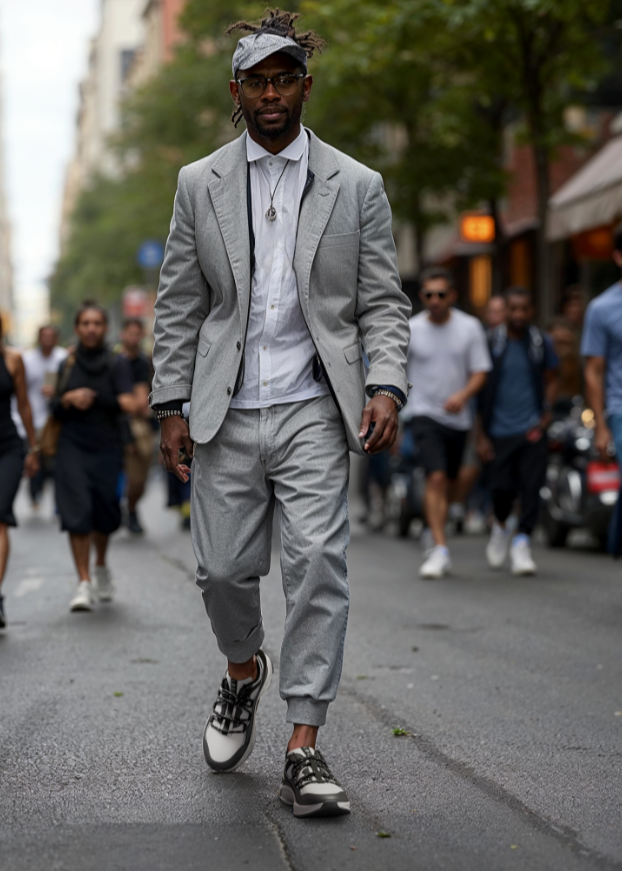
How to Choose and Style Trainers for Smart-Casual Outfits
Finding trainers that deliver comfort without compromising a smart-casual outfit can feel confusing. This guide explains which pairs suit different occasions, how to wear them with tailoring and casual layers, and how to keep them looking sharp.
Small differences in silhouette, colour, and proportion determine whether trainers elevate an outfit or throw it off balance. Follow these practical rules for choosing styles by occasion, pairing trainers with tailoring or relaxed layers, and maintaining, rotating, and selecting sustainable trainers so your outfits stay polished and your trainers last.

How to choose trainers for every occasion and outfit
Match your trainers' level of formality to the most formal piece in your outfit. Pair streamlined, low-profile leather trainers with tailored trousers and a blazer to keep lines cohesive. Reserve chunkier or textured trainers for relaxed jeans and bomber jackets, where casual contrast works. Use colour and sole tone to control emphasis: choose tonal trainers to blend with trousers for an understated silhouette, or introduce a single contrasting element, such as a white sole or coloured heel, to create a focal point without overpowering the look. Select materials that echo your outfit's textures and practical needs. Smooth leather resists creasing and looks smarter, suede or nubuck softens tailoring, and canvas or mesh signals casual intent.
Mind proportions and balance. Slim, cropped trousers preserve leg lines when paired with sleek trainers, while wide legs or layered outfits call for more substantial trainers to avoid visual imbalance. Stand, walk, and photograph the combination to judge how shapes interact and to spot unwanted bulk or gaps. Focus on small details that affect perceived formality: match trainer colour to a belt or watch strap, and use low-profile, no-show liners or thin footliners with cropped hems to maintain a clean ankle line. Keep trainers clean and scuff-free; scuffs draw the eye and can break a streamlined silhouette, whereas tidy footwear keeps the outfit looking intentional and polished.
Choose a streamlined sweat set for effortless, polished casualwear.

How to style trainers with tailoring and casual layers
Choose the right silhouette. Pair slim, low-profile trainers with tapered or cropped tailored trousers to keep a clean line. Reserve chunkier trainers for wider-leg trousers so no single element overpowers the outfit. Adjust the trouser break or hem; a cropped finish sharpens the look, while a soft break relaxes it and shifts the outfit along the smart-casual spectrum. Complete tailored pieces with neat layers such as a knit, a cotton overshirt, or a lightweight wool coat to add depth while preserving the tailoring.
Choose materials that read smart: favour smooth, matte finishes such as high-quality vegan leather or micro-suede to keep trainers neat and versatile, and avoid high shine to preserve a restrained aesthetic. Keep colour tonal with the outfit for cohesion, or add a single deliberate accent, for example a lighter-coloured outsole, to modernise a formal palette, because contrast draws the eye to the footwear and should therefore be deliberate. With cropped trousers, wear invisible liners or low-profile footliners to allow a small ankle reveal or a soft break that keeps proportions smart. Minimise visible sports logos and busy patterns to prevent visual clutter. Maintain the effect by keeping trainers clean, replacing worn laces, and pairing them with crisp tailoring details like a well-pressed shirt cuff or polished belt so the footwear complements, rather than undermines, the suit.
Choose a minimal sweat set to maintain clean lines.

How to care for, rotate, and choose sustainable trainers
A simple cleaning routine preserves a trainer's appearance and structure. Remove the insoles first, then brush away loose dirt with a soft brush. Apply a mild, pH-neutral cleaner to fabric and vegan uppers, working gently to avoid abrading textures. After cleaning, stuff each trainer with absorbent paper and leave to air dry out of direct sunlight to prevent adhesive failure and colour fading. Rotate between at least two pairs, matching each to the activity and the condition of the shoe. Alternating pairs lets midsoles decompress between wears, which slows cushioning loss. Check sole wear patterns before choosing which pair to wear next, since uneven wear shows when a shoe needs swapping or repair. Regularly following these steps reduces repeated compression and helps trainers perform longer.
Check your trainers regularly with a simple flex test: bend the shoe to reveal sole separation, loose stitching, or worn eyelets. Replace insoles and laces as soon as cushioning, grip, or fit starts to decline. Favour trainers built for repair and recycling. Single-material uppers, visible stitching, and replaceable soles make repairs easier, and models that specify water-based adhesives simplify later disassembly and material recovery. Before buying, estimate how many wears you expect, and where possible buy secondhand or use take-back schemes. Donate or recycle worn trainers to keep materials in use and reduce the environmental impact per wear.
Be intentional: treat trainers as deliberate components of a smart-casual outfit by matching their formality, silhouette, material, and colour to your tailoring or casual layers. Small choices in proportion and care change perception: sleek leather with cropped trousers maintains a clean line, chunkier textured trainers balance wider legs, and regular cleaning and rotation extend their life and preserve their appearance.
Use a four-step approach: choose trainers that suit the occasion, with sleeker, low-profile pairs for smart-casual looks and chunkier silhouettes for relaxed outfits; test silhouettes in motion and in photos to check comfort, proportion, and how they sit with trousers or skirts; align materials and colour with your layering palette, since smooth faux-leather reads as smarter and textured knit or canvas works with casual layers; and favour repairable construction, such as stitched uppers and replaceable soles, so repairs are straightforward. These choices make it easier to assemble polished outfits, keep your trainers wearable for longer, and reduce wardrobe waste, simplifying sustainable smart-casual dressing.