

3 Ways to Spot Greenwashing in Trainers' Sustainability Claims
You want trainers that are genuinely kinder to the planet. Too often, vague labels and polished eco-talk disguise ordinary products, making it hard to tell whether a pair is truly sustainable or simply greenwashing.
Cut through vague claims by assessing materials, testing durability and checking end-of-life credentials, transparency and certifications. Use three straightforward checks to spot misleading claims, shop smarter on the high street for trainers and wardrobe staples, and keep your wardrobe aligned with your values.

1. Decode vague sustainability claims and identify greenwashing tactics
Cut through vague sustainability claims on trainer labels and adverts by treating buzzwords such as eco, natural, green and environmentally friendly as prompts to ask for detail. Request exact material names, the per cent of recycled or bio-based fibre by weight, and which stage of the product life cycle the claim covers. Insist on quantified claims with a clear baseline and scope, because recycled-content per cent figures or weight measures that do not cover the whole trainer usually signal marketing rather than measurable improvement. Check for named third-party certification or verifier, confirm whether certification is product-level or company-level, and verify certificate identifiers or audit reports on the certifier's website.
Scrutinise carbon and offset claims. Ask whether terms like carbon neutral or net zero cover Scope 1, 2 and 3 emissions, and whether reported reductions come from direct cuts rather than offsets alone. Check that the organisation publishes an emissions inventory and a clear reduction pathway. Compare marketing imagery and headlines with technical information — materials lists, care labels, manufacturing location and supply chain disclosures — to spot inconsistencies. Use those concrete data points to draw your own conclusion about a trainer's impact, and be particularly wary of small print or irrelevant claims that distract from the main impacts.

2. Evaluate materials, expected lifespan, durability and end-of-life credentials
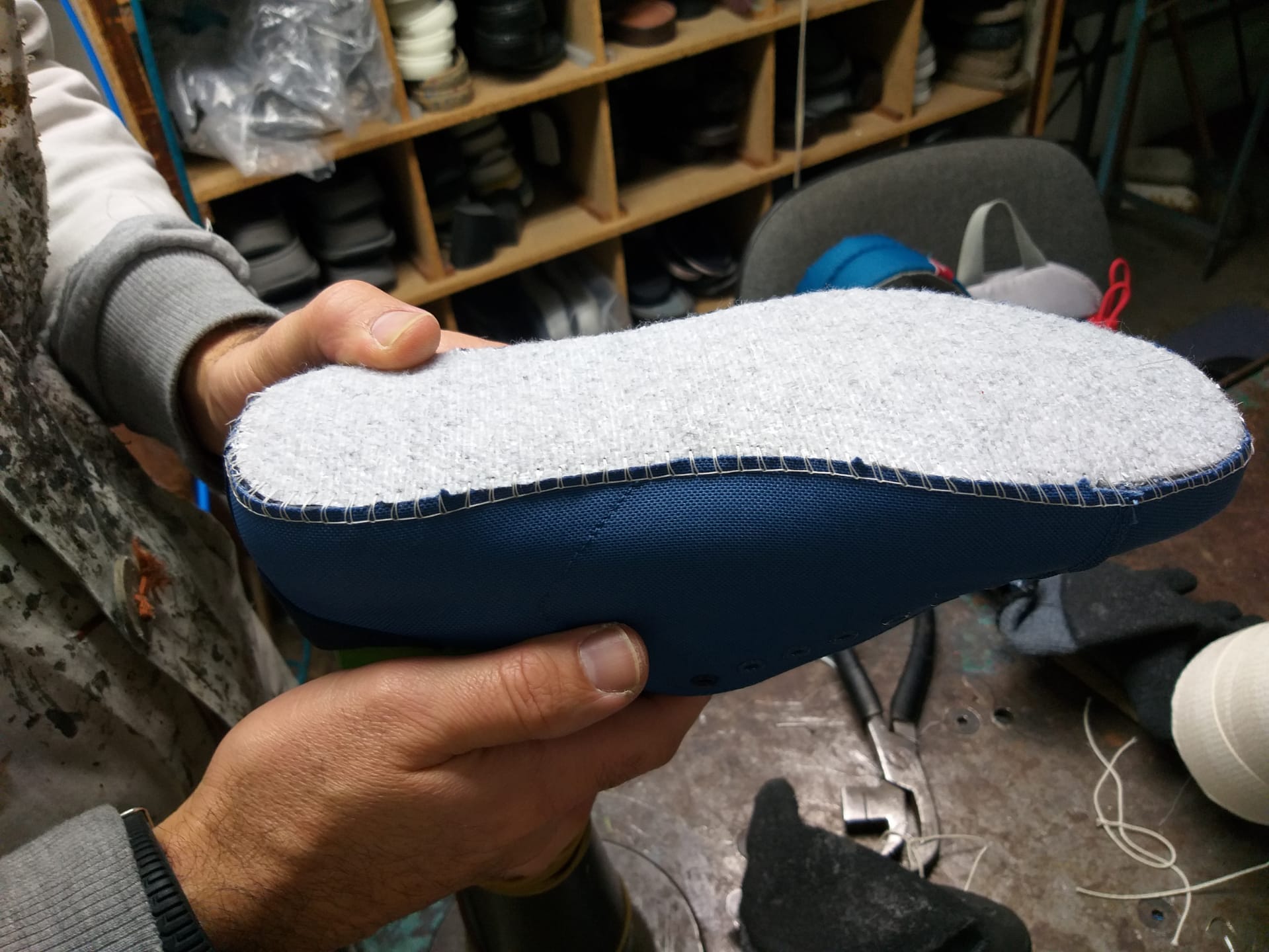
Ask for a full materials breakdown by component, with percentages and sourcing details rather than vague phrases. Labels such as "upper 40% recycled polyester, lining 100% virgin polyester" let you calculate actual recycled content and spot token claims. Check whether trainers are mono-material or designed for disassembly. Mixed textiles, bonded layers, foams and permanently glued soles make recycling far harder, so single-material construction or clear modular design is a good sign. Look for images or descriptions that show stitched welts, removable soles or modular components as evidence of better end-of-life prospects. Insist on independent verification rather than marketing copy: lab reports, life cycle assessment summaries or third party audits provide meaningful proof of material claims and recyclability.
Don’t take longevity claims at face value. When assessing trainers or sneakers, inspect construction details: look for double stitching in high-wear areas, reinforced toe caps and replaceable insoles. Seek independent wear tests and customer repair guides to judge real-world performance and repairability. Scrutinise take-back programmes for clear outcomes. Ask whether returned trainers are recycled into comparable products or downcycled, and request process descriptions or audit evidence for downstream handling. Treat biodegradability and compostable statements with caution. Check whether claims refer to industrial or home composting conditions and insist they are backed by recognised test reports or standards.

3. Demand transparency, valid certifications and measurable environmental impact
Ask for verifiable paperwork up front: certificate numbers, audit summaries or a life cycle assessment you can cross-check against the certifier's public database or the auditor's reports. Scrutinise exactly what the certification covers. Does the standard apply to the whole trainer, a single component, or only a factory process? Is the certifier truly independent and accredited? If verifiable documents are missing, summaries are vague, or the standard is narrowly scoped, treat the claim as marketing rather than proof of real performance — hold makers to account and demand clear, auditable evidence.
Insist on measurable outcomes, for example percentage recycled content by weight, verified CO2e per pair from an LCA, water-use reductions per unit, or standardised durability test results, rather than vague terms like eco, green, or natural. Demand traceability details, including supplier names, material origins, batch or lot numbers, or a scannable QR code linking to a supply-chain map, so you can link claims to identifiable inputs. Seek proof of end-of-life and impact commitments, such as confirmed take-back or recycling partnerships, repairability data, and spare-parts availability. Compare independent audit figures for actual recycling or reuse rates with the product's projected lifespan to judge whether the stated benefits produce real impact.
Spotting greenwashing is straightforward: use three practical checks. Decode vague sustainability claims, scrutinise materials, durability and end-of-life credentials, and verify transparency by checking certifications and measurable impact.
Demand concrete evidence: full material breakdowns by weight, certificate numbers, life cycle assessment figures and verified take-back outcomes. These give you the facts to test environmental claims against real data. When shopping for trainers or other high-street fashion, online or in person, use these checks to keep your wardrobe aligned with your values and to reward products that demonstrate measurable improvement.